Key Takeaways
- Polypropylene is the second-most-produced plastic globally, favored for being lightweight, chemically resistant, and fatigue-resistant in applications ranging from food packaging to automotive parts.
- Produced from propylene gas derived from fossil fuel refining, this material relies on non-renewable resources, generates greenhouse gases, and persists in the environment because it is not biodegradable.
- Although technically recyclable, it suffers from low recovery rates due to sorting challenges and contamination, often resulting in it being downcycled rather than recycled for equivalent products.
- To address sustainability concerns, the industry is exploring alternatives like bio-based plastics and UBQ™, a material made from mixed household waste that integrates with existing manufacturing systems.
Plastics shape the modern world, from food containers and storage boxes to industrial applications and automotive parts. Among these materials, polypropylene stands out as one of the most widely used plastics globally. Known for its versatile thermoplastic nature and excellent chemical resistance, polypropylene influences how we package, protect, and build almost everything around us.
This article explores ‘what is polypropylene plastic’, its properties, common uses, environmental considerations, and how emerging alternatives are redefining sustainability.
What Is Polypropylene (PP)?
Polypropylene plastic is a thermoplastic polymer made from propylene monomers. A member of the polyolefin family, polypropylene belongs to a class of materials valued for their lightweight nature, chemical resistance, and adaptability.
At the molecular level, polypropylene has a crystalline structure and polymer chain arrangement that give it desirable properties such as thermal resistance and shape retention, making it a preferred material for many applications.
Understanding the Molecular Structure of Polypropylene
Polypropylene exists in three basic structures: isotactic, syndiotactic, and atactic, which refer to the spatial arrangement of methyl groups along the polymer chain. Isotactic polypropylene is the most common commercially available, offering higher crystallinity, which results in improved mechanical properties, chemical resistance, and thermal stability.
The material’s molecular weight and crystallinity directly influence its durability under physical stress, its thermal resistance, and even how effectively it can be recycled.
How Is Polypropylene Made?
The manufacturing process of polypropylene begins with propylene gas, a by‑product of fossil fuel refining. Through a polymerization reaction, commonly using Ziegler‑Natta catalysts, propylene molecules link into long polymer chains, creating polypropylene crystallized resin.
This process enables large‑scale production, making polypropylene one of the most manufactured plastics in the world. Its relatively low cost and scalability contribute to its dominance in packaging materials and consumer goods.
Global Production and Market Insights
Polypropylene is the second-most-produced plastic globally, behind polyethylene, with tens of millions of metric tons manufactured annually. Major producers include China, the United States, and Europe. Its role is critical in packaging, automotive, and medical industries due to its scalability, mechanical versatility, and low cost.
Properties of Polypropylene
Physical and Mechanical Properties
Polypropylene’s physical properties make it ideal for durable, everyday use. Its semi‑rigid, low-density structure yields:
- Lightweight nature: ideal for thin-wall containers and plastic parts
- Fatigue resistance: excellent for repeated stress (e.g., hinge applications)
- Melting point around 130–170°C: relatively low melting point compared with some other plastics
Chemical Resistance and Insulation
Among plastics, polypropylene exhibits excellent chemical resistance to acids, bases, and solvents. It is also widely used as an insulation material in electrical applications due to its stable insulating performance.
Recyclability and Sustainability
Polypropylene is technically recyclable and appears in recycling streams labeled “#5”. However, low global recycling rates and challenges in sorting mean it is often downcycled rather than fully recycled into new polypropylene products.
Polypropylene is not biodegradable, and its environmental impact remains a key concern.
Why Isn’t Polypropylene Widely Recycled?
Although recyclable in theory, polypropylene is difficult to recover in practice. It often ends up contaminated with food or other materials, which makes it hard to sort and recycle efficiently. Infrastructure gaps and limited curbside programs contribute to its low recovery rates compared to polyethylene terephthalate (PET) and high-density polyethylene (HDPE).
What Is Polypropylene Used For?
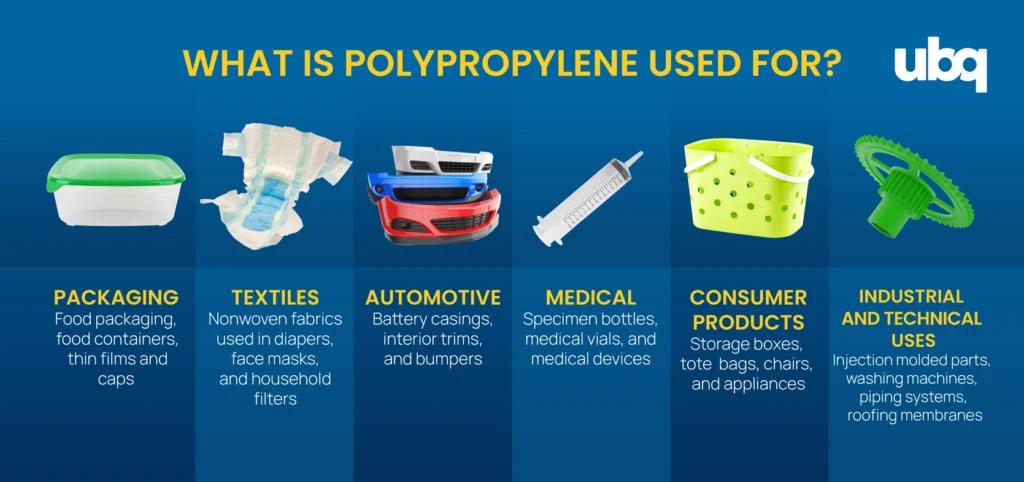
Polypropylene plastic spans a vast range of industries thanks to its versatile thermoplastic nature:
- Packaging: food packaging, food containers, thin films, and caps
- Textiles: nonwoven fabrics used in diapers, face masks, and household filters
- Automotive: automotive parts like battery casings, interior trims, and bumpers
- Medical: medical applications, including specimen bottles, medical vials, and medical devices
- Consumer Products: storage solutions, storage boxes, tote bags, chairs, and appliances
- Industrial and Technical Uses: injection molded parts, washing machines, piping systems, roofing membranes
Everyday Examples of Polypropylene
You encounter polypropylene items more often than you realize:
- Reusable lunch boxes
- Bottle caps
- Plastic chairs
- Suitcases
- Diapers and face masks
- Piping systems and roofing membranes
These examples highlight polypropylene’s lightweight nature and physical stress tolerance.
Advantages of Polypropylene
Polypropylene stands out due to a combination of benefits:
- Relatively low cost compared with other plastics
- Lightweight – lowers transport energy and costs
- Excellent chemical resistance – ideal for food contact and harsh environments
- High fatigue resistance
- Food‑safe in many applications, including food trays and pill containers
- Stable under sterilization conditions (used in some medical and lab applications)
Disadvantages of Polypropylene
Despite its strengths, polypropylene has limitations:
- Made from non-renewable fossil fuels
- Greenhouse gas emissions and environmental damage caused by production
- Susceptible to UV degradation without stabilizers
- Poor adhesion and paintability
- Not biodegradable
- Limited curbside recyclability in many regions
- Deforms at high continuous-use temperatures (typically not used above 100–110°C for long durations)
Polypropylene vs Other Plastics
Polypropylene vs Polyethylene (PE)
While both are polyolefins, polypropylene typically has:
- Higher heat resistance
- Greater stiffness
- Better chemical resistance
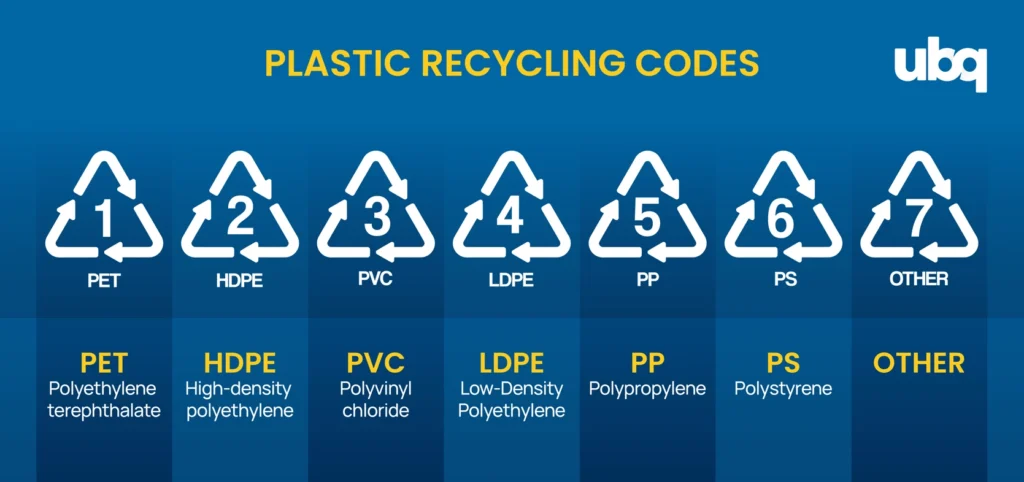
High-density polyethylene (HDPE) and polyethylene terephthalate (PET) offer different balances of flexibility, impact resistance, and transparency.
Polypropylene vs PET, PVC, ABS, etc.
Compared to polyethylene terephthalate (PET), which excels in clear packaging, and polyvinyl chloride (PVC), often used in piping, polypropylene is generally lighter and more chemically resistant but not as transparent.
Acrylonitrile butadiene styrene (ABS) offers superior rigidity and impact resistance, but at a higher cost and lower chemical resistance.
The table below distinguishes between polypropylene plastics and other plastics:
| Plastic Type / Material | Key Strengths | Key Weaknesses | Compared to Polypropylene (PP) |
|---|---|---|---|
| Polypropylene (PP) | Lightweight, strong, chemical-resistant, good fatigue resistance, heat-resistant, suitable for food contact | Not transparent, UV‑sensitive without stabilizers, limited curbside recyclability | — |
| Polyethylene (PE) | Flexible, impact-resistant, widely recycled (especially HDPE) | Lower stiffness and lower melting point | PP is stiffer, with better heat resistance and chemical resistance |
| High-Density Polyethylene (HDPE) | Rigid, tough, good impact resistance | Lower thermal stability than PP | PP performs better at higher temperatures |
| Polyethylene Terephthalate (PET) | Transparent, strong, highly recyclable | Lower chemical resistance, moisture sensitivity | PP is more chemically resistant but less transparent |
| Polyvinyl Chloride (PVC) | Durable, weather-resistant, used in construction | Requires additives; environmental and health concerns | PP is safer for food contact and lighter |
| Acrylonitrile Butadiene Styrene (ABS) | High rigidity, excellent impact resistance | Higher cost, lower chemical resistance | ABS is stronger; PP is lighter, cheaper, and more chemically resistant |
| UBQ™, a bio-based thermoplastic composite made from mixed household waste | Climate‑positive, diverts waste from landfill and incineration, reduces reliance on fossil‑based plastics, compatible with PP processing and applications | Not transparent, currently suited to durable and semi‑durable applications | Significantly lower environmental impact |
Environmental Impact of Polypropylene
Polypropylene’s reliance on petroleum ties it to greenhouse gas emissions. It persists in the environment for decades, contributing to waste and microplastics in marine ecosystems. Addressing these impacts requires better collection systems, recycling infrastructure, and material innovation.
Sustainable Alternatives to Polypropylene
Virgin polypropylene is often cheaper than many sustainable material alternatives, which makes cost a central consideration when companies evaluate new materials. However, some options, such as UBQ™, are designed to remain price-competitive while offering sustainable benefits.
Bio‑based Plastics
Bio‑based plastics are made from renewable resources, but they are currently too limited in scale and performance for broad replacement of oil-based plastics.
Thermoplastic Composites like UBQ™
UBQ™ is an example of a climate‑positive alternative. Made from mixed household waste, UBQ™ blends into existing manufacturing systems. It offers reduced fossil fuel dependency and supports circular economy goals while maintaining compatibility with PP plastic processing. It also supports Scope 3 emission reductions, carbon neutrality, and the circular economy
Rethinking Polypropylene with Circular Materials
Unlike conventional plastics, UBQ™ prevents waste from entering landfills or incinerators. It transforms it into high-performance thermoplastic composites while avoiding additional resource extraction. By integrating UBQ™ into PP-based systems, manufacturers can reduce emissions and move toward circular production, without sacrificing quality.
Reimagine What Plastic Can Be
The future of materials is circular. By embracing innovations like UBQ™ and improving polypropylene recycling, industries can reduce environmental impact while preserving performance.
FAQs About Polypropylene Plastics
Is Polypropylene Safe?
Yes. Polypropylene plastic is widely used in food contact applications and is FDA‑approved for many food packaging and storage containers. It is BPA‑free and stable under normal use. However, concerns about microplastic pollution and improper disposal remain.
Is Polypropylene Recyclable?
Polypropylene is recyclable (plastic #5), but actual recovery is low due to sorting challenges and contamination. Many items end up downcycled, for example, into composite lumber or carpet fibers rather than new packaging or consumer products equivalent to the original item.
Is Polypropylene a Hard or Soft Plastic?
It’s typically semi‑rigid, with enough flexibility for many consumer and industrial uses.
Should You Avoid Polypropylene?
Polypropylene is generally safe for its intended uses. However, many consumers and manufacturers have concerns about the environmental impacts of polypropylene production, disposal, and recycling.
Is Polypropylene Environmentally Friendly?
As a product derived from fossil fuels, polypropylene production is associated with greenhouse gas emissions and environmental degradation. It is technically recyclable but currently has low recovery rates and high environmental persistence.
What’s a More Sustainable Alternative to Polypropylene?
Materials like bio‑based plastics and UBQ™ composites offer pathways to reduce dependence on fossil‑based plastics like polypropylene.