Composition

Giving waste new life as something beautiful, useful and durable

What is UBQ Evolved Materials™ made of?

Most materials start with extraction. UBQ™ starts with a garbage truck. Chicken bones, greasy pizza boxes, food scraps, garden trimmings, diapers, multilayer packaging – the mixed household waste that has nowhere left to go. Through UBQ Materials’ patented process, these discarded inputs are transformed into UBQ™, a bio-based thermoplastic composite that replaces oil-based plastic in thousands of products.

UBQ™ Fusion Process

WHY UBQ™

What makes UBQ Evolved Materials™ unique

Replaces oil-based plastic in thousands of products

Cost stable. Cost competitive. Zero added cost to consumers.

Measurable carbon impact - every kg removes more carbon than it creates

Drop-in ready. 
No new equipment. No retooling.

Comparison

UBQ Evolved Materials™ vs. traditional oil-based plastics

How UBQ Materials' bio-based thermoplastic composite made from waste compares to conventional plastics across the metrics that matter most.

UBQ Evolved Materials™

Traditional Oil-Based Plastics

Bio-based thermoplastic composite

Oil-based thermoplastic polymer

Made from mixed household waste

Made from petroleum and natural gas

Climate-positive material that removes carbon emissions and keeps greenhouse gases out of the atmosphere

Climate harmful due to emissions from extraction 
and production

Stable, cost-competitive pricing


Price volatility linked to oil markets 


Protects natural resources by using waste otherwise destined for landfill or incineration


Relies on continuous extraction of finite resources


Reduces pollution by diverting waste from landfills 
and incineration


Contributes to plastic and water pollution


Production requires no added water and generates 
no emissions or combustion

Production requires significant water use and generates emissions and effluents

UBQ Evolved Materials™

Bio-based thermoplastic composite

Made from mixed household waste

Climate-positive material that removes carbon emissions and keeps greenhouse gases out of the atmosphere

Stable, cost-competitive pricing


Protects natural resources by using waste otherwise destined for landfill or incineration


Reduces pollution by diverting waste from landfills 
and incineration


Production requires no added water and generates 
no emissions or combustion

Traditional Oil-Based Plastics

Oil-based thermoplastic polymer

Made from petroleum and natural gas

Climate harmful due to emissions from extraction 
and production

Price volatility linked to oil markets 


Relies on continuous extraction of finite resources


Contributes to plastic and water pollution


Production requires significant water use and generates emissions and effluents

The Science

How waste becomes a high quality, cost competitive material

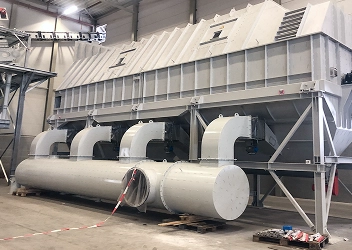
UBQ Evolved Materials™ patented process converts mixed household waste (including organics and hard-to-recycle materials) into a high quality thermoplastic composite. The result is a single, fully replicable material that performs consistently at commercial scale.

01

Dry & screen

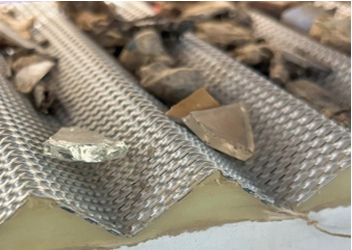
Mixed household waste comes in and is dried and screened to maximize sorting efficiencies.

02

Sort & remove

Waste is then sorted to remove metals and minerals which are then properly recycled.

03

Break down & build

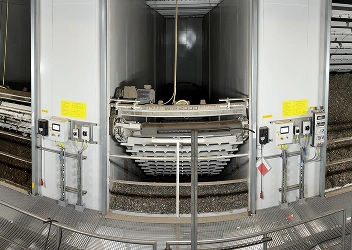
Our patented process breaks down the organics into their basic building blocks. This creates the natural stickiness, which is the matrix that binds all of the components together, even those that aren't chemically compatible.

04

UBQ Evolved Materials™

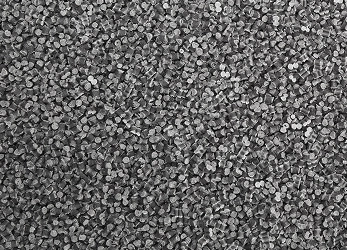
Which results in the creation of UBQ Evolved Materials™, the homogeneous, fully replicable composite material

UBQ™ Fusion Process

Compatible technologies

Drop-in ready

Switch to a climate-positive material without disrupting production. UBQ™ works with your existing equipment, processes, and timelines.

Injection 
molding

3d printing

Extrusion

Rotomolding

Compression molding

Compatible materials

Seamless integration

Whether you work with virgin or recycled polymers, UBQ™ easily integrates into existing formulations.

PP
Polypropylene
rPP
Recycled polypropylene
PE
Polyethylene
PLA
Polylactic acid
PVC
Polyvinyl chloride
PS
Polystyrene
ABS
Acrylonitrile 
butadiene styrene
HDPE
High-density 
polyethylene
rHDPE
Recycled high-
density polyethylene
Note: Specific compatibility and loading levels depend on the final application requirements.

Ready to validate compatibility?

Take the next step in reducing your product’s carbon footprint. Book a consultation with our materials experts.

Book a meeting
Take the UBQ Hero Product Challenge
UBQ blue logo.
Privacy Overview

This website uses cookies so that we can provide you with the best user experience possible. Cookie information is stored in your browser and performs functions such as recognising you when you return to our website and helping our team to understand which sections of the website you find most interesting and useful.