Key Data Points You Need to Know
- None of the 17 SDGs is currently on track to be achieved by 2030 – a finding confirmed by the 2025 Sustainable Development Report.
- Only 35% of assessed SDG targets are on track or making moderate progress. Nearly half (48%) show insufficient movement, and 18% have actually regressed below 2015 baseline levels.
- Global SDG progress has been largely stagnant since 2020, according to the UN Sustainable Development Report 2024.
- SDG 2 (Zero Hunger), SDG 11 (Sustainable Cities), SDG 14 (Life Below Water), SDG 15 (Life on Land) and SDG 16 (Peace & Justice) are flagged as particularly off track at the global level.
- 808 million people (roughly 1 in 10 worldwide) were living in extreme poverty in 2025, with little prospect of the 2030 eradication target being met at current rates.
- Hunger has risen back to levels not seen since 2005. In 2024, approximately 8.2% of the global population (around 733 million people) faced chronic hunger, and over 2.3 billion experienced moderate to severe food insecurity.
- 2024 was the hottest year on record, with global temperatures exceeding 1.55°C above pre-industrial levels, pushing SDG 13 (Climate Action) further from reach.
- In March 2025, the United States formally withdrew its support for the UN SDGs, describing the framework as an expansion of “soft global governance”, a significant blow to the political momentum behind the 2030 Agenda.
The Corporate Picture
The private sector has not stepped up to the degree needed. A major global stocktake by the UN Global Compact and Accenture, surveying more than 2,800 business leaders, found that only around 15% of SDG targets were on track at the halfway point, with progress on 48% described as weak and insufficient. While 94% of business leaders still see the SDGs as a unifying vision, structural barriers are slowing action: 84% cite unclear measurement frameworks, and 82% point to poor data quality as obstacles. Critically, many companies have been accused of ‘SDG-washing’, aligning existing activities with SDG branding without making substantive new commitments.
Despite increased disclosure, the link between reporting and real-world outcomes remains weak.
Looking Ahead: COP31 and the Final Push to 2030
COP31 (the UN Climate Change Conference) is scheduled for 9-20 November 2026 in Antalya, Turkey, with Australia leading the negotiations. It arrives at a pivotal moment: SDG 13 (Climate Action) is severely off track, and the outcomes of COP31 will shape whether the final years of the 2030 Agenda produce meaningful acceleration or further drift.
COP31 is expected to focus on translating the implementation agenda established at COP30 in Brazil into real-world action, including on energy transition, climate finance for developing nations, and adaptation.
The 2026 ECOSOC Partnership Forum will also give focused attention to the following SDGs:
- SDG 6: Clean Water & Sanitation
- SDG 7: Affordable & Clean Energy
- SDG 9: Industry, Innovation & Infrastructure
- SDG 11: Sustainable Cities & Communities
- SDG 17: Partnerships for the Goals
This makes 2026 a critical year for sustainability accountability across both governments and business.
For companies with SDG commitments, the window to demonstrate genuine progress rather than narrative alignment is closing fast.
The world’s sustainability ambitions are framed by 17 goals anchored in social, environmental and economic progress. The United Nations Sustainable Development Goals (SDGs) call on all sectors to act, and UBQ Materials is doing just that by turning mixed household waste into a climate-positive, circular material that supports multiple SDGs.
What Are the 17 Sustainable Development Goals (17 SDGs)?
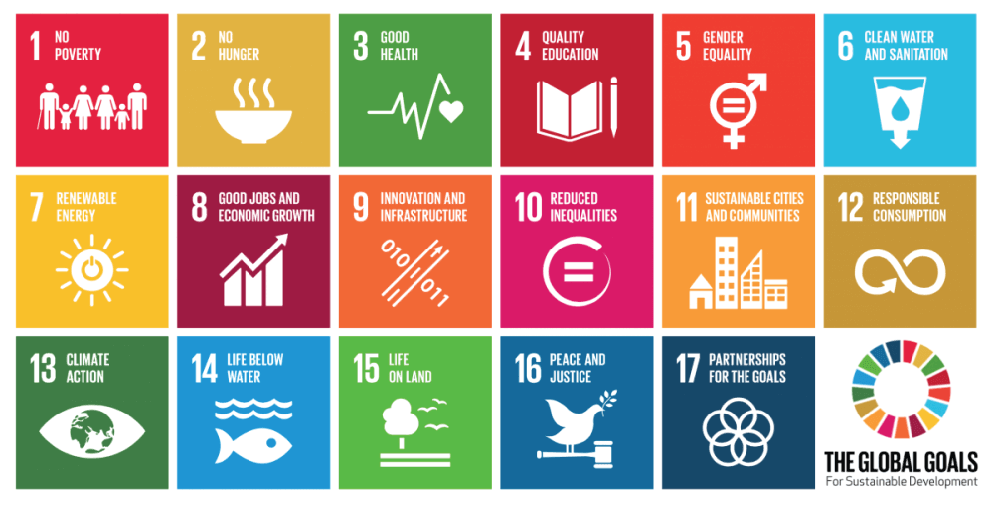
Developed in 2015 by the 193 countries of the United Nations, the SDGs lay out 17 goals designed to achieve sustainable development for everyone globally by the year 2030. Known as the 2030 Agenda, the SDGs represent an urgent call for developed and developing countries to end poverty and other deprivations while improving health, education and economic growth, and reducing inequality. Climate change and the protection of the Earth’s oceans and forests are also central to the framework.
In July 2017, global SDG indicators were adopted by the UN General Assembly. These are complemented by regional and national indicators, and as of 2025, there are 234 official indicators in use across the 169 targets.
The table below maps all 17 SDGs to their ESG impact category and current global progress status as of April 2026:
| Sustainable Development Goal | Description | Impact | 2026 Status |
|---|---|---|---|
| 1. No Poverty | End poverty in all its forms everywhere | Social | Off Track |
| 2. Zero Hunger | End hunger, achieve food security and improved nutrition | Social | Reversal |
| 3. Good Health and Well-being | Ensure healthy lives and promote well-being for all ages | Social | Slow |
| 4. Quality Education | Ensure inclusive and equitable quality education | Social | Slow |
| 5. Gender Equality | Achieve gender equality and empower all women and girls | Social & Governance | Slow |
| 6. Clean Water and Sanitation | Ensure availability and sustainable management of water | Environment & Social | Slow |
| 7. Affordable and Clean Energy | Ensure access to affordable, reliable, sustainable energy | Environment | Moderate |
| 8. Decent Work and Economic Growth | Promote inclusive and sustainable economic growth | Governance & Social | Slow |
| 9. Industry, Innovation, and Infrastructure | Build resilient infrastructure and foster innovation | Governance & Environment | Moderate |
| 10. Reduced Inequality | Reduce inequality within and among countries | Social | Slow |
| 11. Sustainable Cities and Communities | Make cities inclusive, safe, resilient, and sustainable | Environment & Governance | Off Track |
| 12. Responsible Consumption and Production | Ensure sustainable consumption and production patterns | Environment, Social & Governance | Slow |
| 13. Climate Action | Take urgent action to combat climate change and its impacts | Environment & Governance | Off Track |
| 14. Life Below Water | Conserve and sustainably use oceans, seas, and marine resources | Environment | Off Track |
| 15. Life on Land | Protect, restore, and promote sustainable use of ecosystems | Environment | Reversal |
| 16. Peace, Justice, and Strong Institutions | Promote peaceful societies and provide access to justice | Governance & Social | Off Track |
| 17. Partnerships for the Goals | Strengthen global partnerships for sustainable development | Governance | Slow |
Status key: On Track = meeting required pace; Moderate = progressing but not fast enough; Slow = insufficient progress; Off Track = major shortfall; Reversal = declining below 2015 baseline.
Source: UN SDG Reports 2024–2025; Sustainable Development Report 2025.
How UBQ Materials Aligns with the SDGs
Of the 17 Sustainable Development Goals, 8 can be mapped to ‘environmental’ impact. This is where UBQ Materials can directly nurture progress, and we have a direct impact across 6 of them. Given the scale of the global shortfall, particularly for the environmental SDGs, the role of genuine material innovation has never been more important.
SDG 9: Industry, Innovation, and Infrastructure
SDG 9 emphasizes building resilient infrastructure, promoting sustainable industrialization, and fostering innovation. Goals and targets in this area show slightly more positive trends than others, though progress remains too slow and uneven across countries.
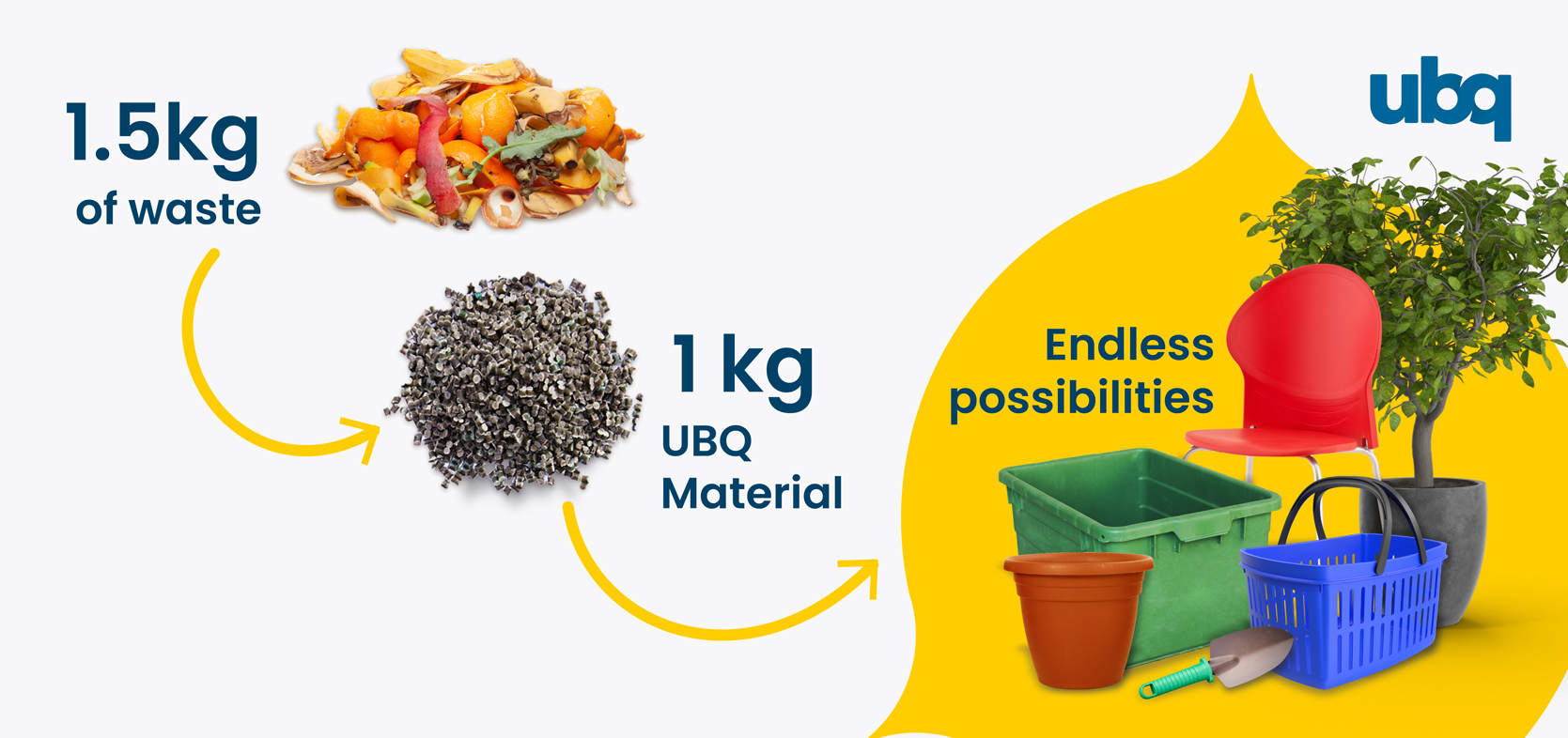
UBQ Materials contributes to sustainable industry and innovation by transforming mixed household waste, including organic and hard-to-recycle materials, into UBQ™, an advanced, cost-stable, climate-positive material. This innovative process reduces reliance on petroleum-based plastics and offers extracted resources, offering manufacturers a lower-carbon alternative that supports the transition to a circular economy.
SDG 11: Sustainable Cities and Communities
SDG 11 is among the SDGs flagged as particularly off-track at the global level. This goal focuses on making urban areas inclusive, safe, resilient, and sustainable, covering efficient waste management, sustainable infrastructure development, and resource-efficient urban growth to improve the quality of life in cities while minimizing environmental impact.
UBQ Materials supports the development of sustainable cities by converting organic and hard-to-recycle waste into a climate-positive composite, UBQ™. This process reduces reliance on landfills and incineration while mitigating greenhouse gas emissions. UBQ™ replaces conventional polymers used in building applications such as roofing and flooring, supporting more sustainable urban infrastructures.
SDG 12: Responsible Consumption and Production
Corporate sustainability reporting has grown significantly, with the number of sustainability reports produced by large companies growing fourfold between 2016 and 2023, yet the UN notes that progress on SDG 12 remains deeply insufficient. Post-harvest food losses stand at 13.2% globally, unchanged since 2016, and the world remains seriously off track to halve per-capita food waste by 2030.
UBQ Materials addresses the challenges of consumption and waste by converting landfill and incinerator-bound mixed household waste into UBQ™, a sustainable bio-based thermoplastic material. This technology closes the loop on waste disposal, enabling manufacturers to reduce reliance on conventional plastics while increasing the amount of material recycled.
SDG 13: Climate Action
SDG 13 is critically off track. 2024 was the hottest year ever recorded, with global temperatures surpassing 1.55°C above pre-industrial levels. Climate-related displacement reached a 16-year high in the same year, and global emissions continue to rise rather than fall at the pace required by the Paris Agreement.
UBQ’s patented technology converts municipal household waste, including organics and hard-to-recycle materials, into a bio-based thermoplastic composite, UBQ™, directly addressing one of the least-visible contributors to climate change: landfill methane emissions. Municipal solid waste landfills are the third-largest source of human-caused methane emissions in the United States, accounting for approximately 14.4% of these emissions in 2022.
Our focus is not just climate action but contributing to a circular economy that transforms how industries consumer resources. UBQ™ is safe for both people and the environment, and reduces reliance on oil-based plastics and other extracted materials.
SDG 14: Life Below Water
SDG 14 is among the goals showing the greatest regression globally. The World Economic Forum reports that plastic waste in the ocean is set to increase fourfold by 2050, with microplastic levels potentially growing 50 times by 2100. Marine biodiversity and the ecosystems that billions of people depend on for food and livelihoods are under severe strain.
By converting mixed household waste into a new material replacement, UBQ Materials helps mitigate marine pollution at its source, intercepting non-degradable waste before it reaches aquatic ecosystems and supporting a sustainable, circular solution to one of the world’s most visible environmental crises.
SDG 15: Life on Land
SDG 15 is showing a reversal of progress globally. The Red List Index – a key measure of biodiversity – is among the five indicators where the highest proportion of countries are going backwards. Deforestation and land degradation, driven by unsustainable resource extraction and waste accumulation, threaten wildlife and reduce carbon sequestration capabilities worldwide.
UBQ Materials converts mixed household waste into a climate-positive material that replaces oil-based plastics, reducing the need for landfill space and mitigating environmental harm to land ecosystems. This circular approach helps conserve natural resources, reduce land pollution, and support biodiversity by reducing the ecological footprint of products traditionally made with extracted materials.
Sustainable Innovation Leading the Way
Companies that positively impact people, the planet, and profit often offer the most exciting sustainable innovations, and it is these innovators who must use their resources and scale to address societal and environmental issues. Together with disruptive technologies, new mindsets and business models, such as a circular economy, define what innovation in the sustainability sphere looks like today.
As a critical component of sustainability, innovation is now seen as an indicator of which companies are leaders and which are followers. Those who lead know that business as usual is not enough, particularly as the 2030 deadline closes in with the vast majority of SDG targets still unmet. The reinvention of products and services to achieve market advantages has taken the place of traditional determining factors like cost savings, risk management, and reputation alone.
Plastics Critical for a Sustainable Future
Light, versatile, and entrenched in modern life, plastic will remain crucial in the foreseeable future. There are great opportunities available for sustainable plastics to be developed and used to bridge the gap of demand while closing the loop between waste and renewable resources.
By using mixed household waste destined to landfills or incinerators and giving it a new life, UBQ™ material supports a more circular economy. It can be used as a material replacement or additive to conventional plastics in durable and semi-durable applications, enabling companies to create more sustainable products without extracting new resources from the planet.
Transforming the World One SDG at a Time
At first glance, a product like UBQ™ might seem limited to meeting sustainable development goals like responsible consumption and production, climate action, and industry, innovation, and infrastructure. But it’s important to keep in mind that all 17 SDGs are related; what’s accomplished in one goal affects the remaining 16. Understanding the human-environment-society linkage between the 17 SDGs enables innovators to identify opportunities that have the greatest impact and are achievable within the next decade.
With the 2030 deadline approaching and none of the SDGs on track, UBQ Materials believes it’s essential for companies to step up to their sustainability responsibilities. For our part, we’re dedicated to reimagining and reinventing the relationship between sustainability and the health of our people, planet and profits, continually working to develop economically feasible solutions that advance the 17 Sustainable Development Goals. See how UBQ contributes directly to the UN SDGs.
FAQ: Companies and the SDGs
With four years remaining to the 2030 deadline, questions about corporate performance against the SDGs are being asked with increasing urgency. Here is what the data currently shows.
Are companies hitting their SDG targets?
In short: overwhelmingly no. The picture is one of widespread shortfall, with a significant gap between stated ambitions and measurable outcomes.
- A 2023 ‘SDG Stocktake’ joint report by the UN Global Compact and Accenture surveyed more than 2,800 business leaders globally and found that only around 15% of SDG targets were on track at the halfway point to 2030.
- The same research found that 48% of SDG targets were progressing at a pace described as ‘weak and insufficient’, and a further proportion had stalled entirely.
- Corporate sustainability reporting has expanded significantly, 95% of world’s top 250 companies now publishing carbon targets (up from 80% in 2022).
- The concept of ‘SDG-washing’ has become a growing concern: companies aligning existing activities with SDG branding without making substantive new commitments or investments. Researchers have found that the majority of corporate SDG engagement is driven by public relations (PR) and reporting rather than genuine strategy integration.
- Structural barriers are widely cited: 84% of business leaders say unclear measurement resources prevent meaningful progress; 82% point to poor data quality; and 77% cite skills shortages as a limiting factor.
Which SDG areas show the most progress?
Progress, where it exists, is concentrated in a handful of areas:
- Energy access and renewables: Electricity access has risen to 92% globally, with renewables now supplying approximately 30% of electricity generation, one of the more positive trends in the SDG framework.
- Health (specific areas): Child mortality has declined, HIV prevention efforts have had a measurable impact, and neglected tropical diseases have been eliminated in 54 countries. Universal electricity access has been achieved in 45 countries.
- Digital inclusion: Access to mobile broadband has expanded significantly, narrowing the digital divide in many regions.
- SDG 9 (Industry, Innovation and Infrastructure) shows slightly more positive trends than most other goals, though progress remains too slow and uneven across country groups.
- Nordic nations continue to lead globally: Finland, Sweden and Denmark top the 2025 SDG Index, though even these leading nations face significant challenges on several individual goals.
Which SDGs are most likely to miss their goals?
The UN’s own assessment is stark: based on current trends, none of the 17 SDGs will be achieved by 2030. The goals most at risk of the greatest shortfalls, and where corporate action is most urgently needed, include:
- SDG 1 (No Poverty): 808 million people remain in extreme poverty in 2025. At current rates, 8.9% of the global population will still live in extreme poverty by 2030, far from the eradication target. Developing countries face a $4 trillion annual shortfall in SDG financing.
- SDG 2 (Zero Hunger): One of the most alarming reversals. Over 700 million people currently face hunger, with levels back to where they were in 2005. By 2030, up to 512 million people could still be chronically undernourished if trends continue. Obesity rates are simultaneously rising, creating a dual malnutrition crisis.
- SDG 13 (Climate Action): Global temperatures hit 1.55°C above pre-industrial levels in 2024, surpassing the key threshold in the Paris Agreement. Climate-related displacement reached a 16-year high. The US withdrawal from SDG commitments in March 2025 has weakened international momentum precisely when acceleration is most needed.
- SDG 14 (Life Below Water) and SDG 15 (Life on Land): Both show active reversal of progress since 2015. The Red List Index of species survival is declining, and marine plastic pollution is projected to increase fourfold by 2050.
- SDG 11 (Sustainable Cities and Communities): Urban populations are growing faster than sustainable infrastructure can accommodate, and waste management challenges remain acute across the developing world.
For businesses, the implication is clear: the companies most likely to make meaningful progress will be those that embed SDG commitments into core strategy and operations, not those that rely on communication and reporting frameworks alone.
With COP31 arriving in November 2026 and the 2030 deadline fast approaching, the accountability window is narrowing.