Key takeaways
- How to define, measure, and categorize your carbon footprint
Understand the role of CO₂ equivalents, emission scopes (1, 2, and 3), and carbon accounting methods. - Why managing emissions is essential for ESG, compliance, and consumer trust
Explore how carbon footprint data supports climate action and corporate sustainability. - How Life Cycle Assessment (LCA) guides carbon-smart decisions
Discover how LCA helps identify emission hotspots and reduce environmental impact across the supply chain. - How innovative materials like UBQ™ help reduce emissions and support circularity
Learn how companies like Mercedes-Benz and PepsiCo are lowering their carbon footprint through a climate-positive material substitution.
Understanding your carbon footprint is becoming more important than ever. Whether you’re an individual, a business, or part of a global supply chain, carbon emissions touch every aspect of our lives. In a world rapidly shifting toward climate accountability, knowing how to measure, reduce, and manage carbon emissions is key to building a sustainable future.
This article breaks down the fundamentals of carbon footprint: what it means, why it matters, how emissions are measured, and what companies can do to reduce their environmental impact. From the science behind CO₂ equivalents to the role of sustainable materials like UBQ™, you’ll gain a clear picture of how your footprint is calculated and how to take action.
What is Carbon Footprint?
A carbon footprint is the total amount of greenhouse gases (GHGs) -carbon dioxide (CO2), methane (CH4), nitrous oxide (N2O), hydrofluorocarbons (HFCs), perfluorocarbons (PFCs), and sulfur hexafluoride (SF6)- that are released into the atmosphere as a result of an activity, like driving a car; a product’s life cycle, from production to disposal; an organization’s operation, or an individual’s lifestyle.
These emissions are usually expressed in carbon dioxide equivalents (CO2e/ Co2eq), which makes it possible to compare the impact of different greenhouse gases in a common unit. Some organizations prefer one style (CO2e) over the other (Co2eq), but scientifically they refer to the same metric. In simpler terms, a carbon footprint measures how much we contribute to climate change through the emissions generated by what we produce, use, or do.
Main Greenhouse Gases
These are the greenhouse gases released into the atmosphere that are included in the carbon accounting process:
Carbon dioxide (CO₂): Emissions resulting from fossil‑fuel combustion, industrial processes, and land‑use change.
Methane (CH₄): A powerful greenhouse gas produced by waste management (including landfill), agriculture and energy‑sector leaks.
Nitrous oxide (N₂O): Emitted primarily via agricultural activities and certain industrial processes.
Other Gases
Other gases such as HFCs, PFCs and SF₆ are also assigned CO₂ eq values due to their high global‑warming potential.
HFCs (Hydrofluorocarbons)
- What they are: Synthetic compounds commonly used as refrigerants in air conditioners, refrigerators, and heat pumps.
- Why they matter: They don’t deplete the ozone layer like older substances (e.g., CFCs), but they are potent greenhouse gases with high global warming potential (GWP).
PFCs (Perfluorocarbons)
- What they are: Gases primarily generated as byproducts of industrial processes, such as aluminum production and semiconductor manufacturing.
- Why they matter: They are extremely persistent in the atmosphere and have very high GWP, lasting thousands of years.
SF₆ (Sulfur Hexafluoride)
- What it is: A man-made gas used mainly as an insulator in high-voltage electrical equipment.
- Why it matters: It has one of the highest known GWPs, over 23,000 times more potent than CO₂ and remains in the atmosphere for more than 3,000 years.
Each of these gases is assigned a CO₂ equivalent (Co2e/CO₂ eq) value to quantify their impact in terms of global warming, making it easier to compare and report emissions on a consistent scale.
Why Does a Carbon Footprint Matter?
A carbon footprint isn’t just a number, it’s a reflection of our climate impact. Every product manufactured, service delivered, or decision made across a supply chain carries an emissions cost. Understanding and managing carbon footprints is central to climate action, responsible business, and long-term resilience.
The Climate Connection
Carbon emissions impact the climate by amplifying the greenhouse effect, which traps the sun’s heat and warms the planet. Human activities, primarily burning fossil fuels, release large amounts of greenhouse gases into the atmosphere, driving global warming and, ultimately, climate change. These emissions originate from everyday activities: transportation, manufacturing, energy use, and waste. Left unmanaged, the accumulation of these gases leads to rising sea levels, extreme weather events, ocean acidification, and biodiversity loss.
Corporate ESG and Compliance
As governments and financial markets tighten regulations, carbon accounting has become a core pillar of Environmental, Social and Governance (ESG) performance. Companies are expected to measure and disclose their emissions in alignment with frameworks like the GHG Protocol, Carbon Disclosure Project (CDP), and the EU’s Corporate Sustainability Reporting Directive (CSRD). Proactive carbon management isn’t just about regulatory alignment, it’s about future-proofing operations in a carbon-conscious economy.
Consumers Are Paying Attention
Today’s consumers are more informed and climate-aware than ever. A company’s environmental impact can significantly influence purchasing decisions, brand perception, and customer loyalty. Businesses that demonstrate climate transparency and take action to reduce emissions are better positioned to earn trust and maintain relevance in a shifting marketplace.
Waste as an Emissions Driver: The UBQ™ Example
One of the most overlooked contributors to emissions is landfill-destined waste. Organic materials like food scraps, paper, and yard waste decompose anaerobically in landfills, releasing methane, a greenhouse gas over 80 times more potent than CO₂ in the short term.
UBQ Materials tackles this challenge at its root. By converting household waste, including organics into a climate-positive thermoplastic composite, UBQ™ not only diverts waste from landfills but also prevents these emissions before they occur by temporarily storing biogenic carbon for the material’s lifespan. It’s a clear example of how materials innovation can directly support carbon footprint reduction while advancing circular economy goals.
Types of Emissions: Scope 1, 2, and 3 Explained
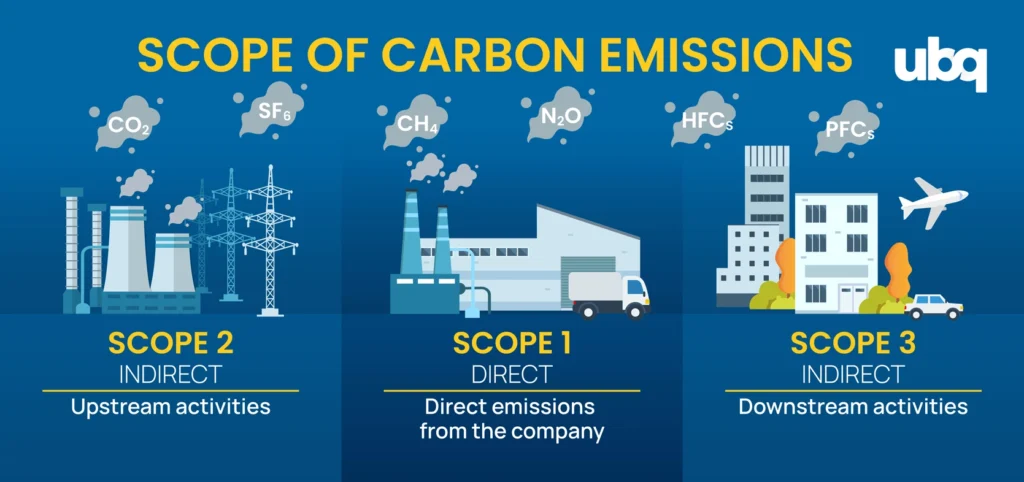
To measure a carbon footprint accurately, it’s important to understand the different types of greenhouse gas (GHG) emissions across the value chain, categorized into Scope 1, Scope 2, and Scope 3. These scopes help companies identify where emissions originate, from their direct operations to the farthest reaches of the value chain.
Scope 1: Direct Emissions
These are emissions from sources that a company owns or controls directly. Common examples include:
- Fuel combustion from company-owned vehicles
- Emissions from natural gas or oil that are used for heating buildings and facilities.
- Process emissions from industrial operations
Scope 2: Indirect Emissions from Purchased Energy
Scope 2 covers indirect emissions from the generation of purchased electricity, steam, heating, or cooling. Although these emissions occur off-site, they are a direct result of the company’s energy consumption.
Scope 3: Indirect Emissions Across the Value Chain
Scope 3 includes a company’s entire value chain, from supplier emissions to product end-of-life (EOL) disposal, often making up the majority of a company’s carbon footprint. These stem from:
- Supplier activities and raw material extraction
- Emissions from shipping and logistics
- Product use and end-of-life treatment
- Business travel, employee commuting, and third-party logistics
This is where sustainable sourcing, circular design, and climate-conscious materials like UBQ™ can make a powerful impact.
Emissions Scope Comparison Table
| Scope | Source | Examples |
|---|---|---|
| Scope 1 | Direct emissions from owned/controlled sources | Company vehicles, on-site boilers, power generated at the plant. |
| Scope 2 | Indirect emissions from purchased energy | Electricity, district heating/cooling purchased from a utility. |
| Scope 3 | Indirect emissions across the value chain | Raw materials, transportation, product use, waste treatment, supply chain, product EOL. |
By understanding all three scopes, companies can pinpoint emissions hotspots and target reduction strategies more effectively, from operations to product design to procurement.
How Is a Carbon Footprint Calculated?
Carbon footprint is calculated through carbon accounting, a systematic process of identifying, quantifying and reporting the greenhouse‑gas emissions tied to an organization’s operations, value chains and products. It is measured in carbon dioxide equivalent (CO₂ eq) to capture the full climate impact of major greenhouse gases, including methane and nitrous oxide.
While carbon footprint is the number, carbon accounting is the method used to calculate that number.
Calculating a carbon footprint helps turn climate impact into something measurable and manageable. It transforms emissions from abstract concepts into measurable data, allowing organizations to track progress, identify high-impact areas, and make informed sustainability decisions.
Carbon Accounting Methods
There are three primary approaches to calculating carbon emissions:
- Spend-Based:
Estimates emissions based on financial data, i.e., how much is spent on goods or services. It uses average emission factors per dollar spent. This method is simple and scalable, but less precise. - Activity-Based:
Calculates emissions based on actual activity data, such as liters of fuel consumed or kWh of electricity used. It is more accurate but requires detailed data collection. - Hybrid Approach:
Combines both spend-based and activity-based methods for a more robust and flexible calculation, often used when full activity data isn’t available.
Emission Factors
Emission factors are key to converting activities into emissions data. For instance, one liter of diesel burned emits approximately 2.54 kg of CO₂. These factors are published by reputable sources like the Intergovernmental Panel on Climate Change (IPCC), national inventories, and industry-specific databases.
Tools and Standards
Reliable reporting depends on standardized methodologies. The most widely used frameworks and tools include:
- The GHG Protocol: The global standard for carbon accounting and emissions reporting.
- ISO 14064: An international standard for quantifying and verifying GHG emissions.
- Carbon calculators and LCA software: Tools like SimaPro, GaBi, or internal carbon management platforms help streamline calculations.
Life Cycle Assessment (LCA) and Carbon Footprint
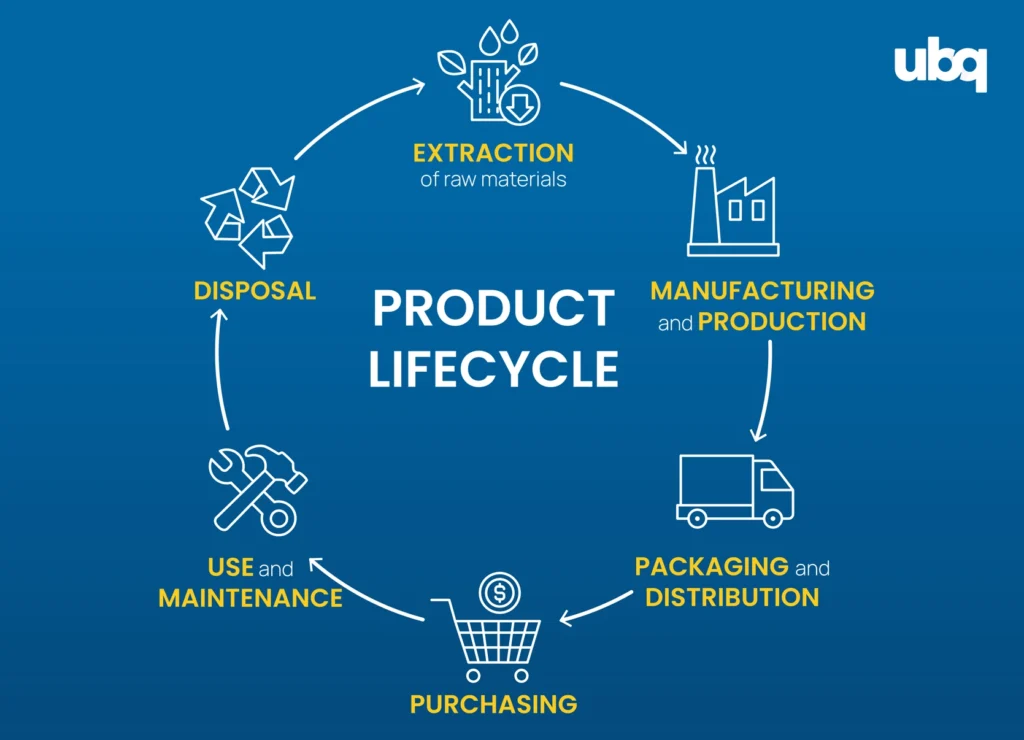
Understanding the carbon footprint of a product or service requires more than tracking what happens inside company walls. That’s where Life Cycle Assessment (LCA) comes in as a method for evaluating the total environmental impacts of a product across its entire life cycle, from raw material extraction to disposal.
What Is a Life Cycle Assessment?
A comprehensive life cycle assessment evaluates energy use, resource extraction, emissions, and waste across each stage of a product’s journey. By accounting for every step, from cradle-to-grave or cradle-to-gate, companies gain a clearer picture of their greenhouse gas emissions, including carbon dioxide (CO₂), methane (CH₄), and nitrous oxide (N₂O).
LCA results are typically expressed in carbon dioxide equivalents (CO₂eq), enabling fair comparison between gases that contribute to global greenhouse gas emissions. This approach helps decision-makers pinpoint which phases emit the most carbon emissions and where change can make the greatest difference.
System Boundaries: Cradle to Grave vs. Cradle to Gate
- Cradle-to-Grave: Assesses environmental impacts across the full life cycle, from material extraction to product use, and finally, end-of-life disposal.
- Cradle-to-Gate: Covers the footprint from raw materials through to the factory gate, excluding the use and disposal phases.
- Cradle-to-Cradle: A circular model in which materials are reused or recycled in continuous loops, reducing waste and fossil fuel dependency.
Why LCA Matters in the Climate Crisis
The climate crisis demands informed action and that starts with measurement. LCAs provide data-backed insights to support climate action, enhance transparency, and meet growing regulatory and consumer expectations. They’re also a key tool for identifying opportunities to reduce emissions across supply chains, from upstream emissions during production to downstream waste impacts.
Carbon Footprint Management for Companies
Managing a company’s carbon footprint is about more than compliance, it’s a competitive advantage. From cutting greenhouse gas emissions to strengthening brand credibility, corporate carbon management is a foundational pillar of sustainability strategy.
Carbon Accounting and Disclosure
Corporate carbon footprint management begins with carbon accounting. This includes tracking Scope 1, 2, and 3 emissions, aligning with globally recognized standards like the GHG Protocol and ISO 14064. Transparent emissions reporting is now a key expectation under frameworks like the EU’s Corporate Sustainability Reporting Directive (CSRD) and is increasingly requested by investors and consumers alike.
Setting Targets and Taking Action
After measurement comes action. Companies are setting science-based targets to reduce emissions in line with the Paris Agreement, and embedding climate action into every aspect of operations, from energy sourcing to product development.
This is where materials innovation plays a central role.
Sustainable Materials: UBQ™, a Bio-based Thermoplastic
UBQ™ offers companies a direct, measurable way to lower their carbon dioxide emissions. As a climate-positive material made from landfill and incineration-bound household waste, UBQ™ prevents methane release from organic decomposition by temporarily storing biogenic carbon for the material lifespan, while reducing the demand for fossil fuel–based plastics.
Using UBQ™ in product formulations helps lower the average carbon footprint of products while supporting circular economy objectives.
Real-World Impact: Leading Brands Taking Action
Global brands are already integrating UBQ™ to reduce their environmental footprint:
- Mercedes-Benz: Using UBQ™ in car parts as part of their sustainable manufacturing initiatives.
- PepsiCo: Incorporating UBQ™ into logistics assets like shipping pallets, product displays, and cargo trucks, which cuts emissions across their supply chains.
- McDonald’s (Arcos Dorados): Adapting UBQ™ into their serving trays, bench seating and electrical system components.
- Crescent Garden: Incorporating UBQ into their Circular Positive™ planter portfolio.
These companies are not only reducing emissions, they’re turning waste into a resource, transforming climate goals into tangible outcomes.
How Can Companies Reduce Their Carbon Footprint?
Reducing a company’s carbon footprint means tackling emissions across materials, design, sourcing, and operations. Here are four effective strategies:
- Material Substitution: UBQ™ Replacing Fossil-Based Plastics
Replacing traditional plastics with UBQ™ reduces reliance on fossil fuels and prevents methane emissions from landfill-bound waste, as well as CO2 emissions from waste incineration. It also decreases the need for natural resources extraction while offering a low-impact, climate-beneficial material solution. .
- Product Design for Circularity and Recyclability
Circular products use fewer resources and are easier to reuse or recycle. Smart design, paired with life cycle assessments, reduces environmental impacts and supports long-term carbon management.
- Supplier Engagement and Sustainable Procurement
Sourcing from suppliers that use renewable energy, offer emissions data, and adopt circular materials like UBQ™ is key to lowering upstream emissions and improving the product’s average carbon footprint.
- Internal Policies: Sustainable Travel and Remote Work
Reducing business travel, promoting remote work, and improving energy efficiency can lower carbon emissions across operations. These actions also support cost savings and climate goals.
Final Thoughts
In the face of the climate crisis, understanding and managing your carbon footprint is more than a sustainability trend, it’s essential for long-term business resilience and environmental responsibility.
From direct operations to complex supply chains, every stage of a product’s life contributes to greenhouse gas emissions. But action starts with awareness. Tools like life cycle assessment and frameworks like the GHG Protocol offer the clarity companies need to measure, report, and improve.
Innovative materials such as UBQ™ empower organizations to go further, transforming landfill and incineration-destined waste into valuable, climate-positive inputs. By replacing conventional, fossil fuel–based plastics with UBQ™, companies can significantly reduce emissions, support circularity, and lead the shift toward a lower-carbon economy.
Common Questions and Examples
What’s the difference between a carbon footprint and an ecological footprint?
A carbon footprint measures how much a person, product, or organization contributes to greenhouse gas emissions, typically expressed in carbon dioxide equivalents. It focuses on the impact of activities like burning fossil fuels, industrial processes, and waste management.
An ecological footprint, on the other hand, takes a broader view, assessing the total natural resources needed to support a lifestyle or business, including land use, water consumption, and food production. While both are important, the carbon footprint is more directly tied to the climate crisis.
What is the main cause of a carbon footprint?
The primary cause of a carbon footprint is the release of greenhouse gases from human activities, especially the burning of fossil fuels like coal, oil, and natural gas. These fuels power our homes, vehicles, industries, and supply chains, and as they burn, they emit greenhouse gases such as carbon dioxide, methane, and nitrous oxide, all of which trap heat in the atmosphere and drive the climate crisis.
Globally, energy production, transportation, industrial manufacturing, and waste are the biggest contributors to humanity’s carbon footprint. According to organizations like the Environmental Protection Agency, addressing these emissions is essential to meeting climate targets.
What are 5 things that contribute to your carbon footprint?
Five major factors that increase your carbon footprint include:
- Transportation
Using gasoline or diesel-powered vehicles significantly contributes to emissions. Poor fuel economy increases the carbon impact per mile traveled. - Energy Use at Home or Work
Heating, cooling, and powering buildings with natural gas or non-renewable electricity leads to high carbon dioxide emissions. - Diet and Food Waste
High meat consumption and wasted food both contribute to methane emissions and increase your ecological footprint. - Consumption and Product Use
The production and transport of goods, especially those made from virgin plastic or metals, involve resource-intensive processes that emit greenhouse gases. - Waste Disposal
Landfilled waste, particularly organics, releases methane as it decomposes. Diverting waste through recycling, composting, or material innovation (like using UBQ™) helps reduce emissions.